Showing posts with label Prose. Show all posts

Sep 10, 2012

The vanishing light of ‘Raushandaan’

Once, the pride of our buildings, occupying the highest edifices of the walls…literally, ‘Raushandaan’ is now an endangered species in the contemporary design space. This raises some pertinent questions, not only about its utility alone but also about our collective decline of social, traditional, environmental and creative sensibilities. 


With tropical climate of the Indian sub-continent, architects, designers and builders have been incorporating Raushandaan in all kinds of buildings: residences, havelis, kothis, tombs, temples or official buildings as well as public complexes. It served a dual purpose of illumination and ventilation inside the building. Built in all forms, shapes, sizes, Raushandaan could be seen beautifully crafted in ‘Jaali’ work, stones, stained glass, wire mesh, blinds, wooden doors and pivots etc. It has had various stylistic influences down the ages like Islamic architecture, Rajasthani motifs, European designs etc.


However, the reality of the day is that there are hardly any Raushandaan to be seen in any modern construction. Reasons could be aplenty. Is it because of a gradual shift in our aesthetic sensibilities or has it lost its function and purpose in today’s times? Or should the blame be put on the dramatically changing weather conditions? The huge demand for high-rise apartment complexes and office buildings has led to buildings with low height per floor ratio, glass facades and central air-conditioners. This mindless aping of the western style air-tight buildings may or may not actually be suitable to our climatic, social and environmental conditions! Yet, the reasons could be much more. 


Raushandaan was also a way to perpetually remain in connection with nature, which sadly remains cut-off from most urban homes today. The same was reflected in our social relations with family and neighbourhood. There was hardly a concept of ‘bed-rooms’. The kitchen, toilets, verandas and all other spaces were equally accessible to all in the family. But the change in social paradigms, increase in the number of nuclear families and a general sense of insecurity has led to the cropping up of completely enclosed spaces where there is no room for a ‘la Raushandaan


This also raises a larger debate of the increasing materialistic approach towards consumption and living. The general lack of creative sensibility, functional understanding and aesthetics, all have led to every town look the same! 

Whatever the reasons be, fact is that this traditional, beautiful  building design element called ‘Raushandaan’ is being pushed into obscurity. 

Apr 16, 2012

Ajanta Caves


 'Ajanta Caves are one of the most awe inspiring and historically rich heritage sites in the world’. I had, obviously heard and read a lot about these caves, to be able to make such a statement. But it was only when I actually visited the place last year, that I realised the profundity of it all!

To my mind, there have been three distinct phases in the long life of these caves. The first phase was when the caves were first spotted, dug, sculpted and elaborately painted in the early part of the first millennium. The second was when Capt. John Smith, chanced upon these jewels, while on a hunting trip in the thick jungles of Deccan in 1819. The third and the last phase is the present. Each and every time a visitor sets foot at their door, they, both the visitor and the caves; get a fresh lease of life.

It must be a long and weary journey for these centuries’ old caves, alone in the desolate jungles, but for the guiding light of Buddha and his followers, they have dutifully survived to spread his message to this age! 

There are 32 caves in-toto, all in a single line on the horse shoe shaped hill side. The very first look at these caves left me spell bound. In spite of having sifted through a number of websites and books in advance, nothing prepared me for the real stuff. I was like..."Wow! Ancient is SO real". Gingerly, I started walking towards them.

The first two caves are home to the world famous paintings, one of which has even been done by mum in batik back home! The paintings, 'frescoes' actually, depict the life and times of Prince Siddharth, who later became Buddha as mentioned in the 'Jataka' stories. They are all over...on the walls, ceiling, pillars, porch... each and every nook and corner is covered with some moment or incident related to Buddha's life.  And they are done with such flair that one look at them and you feel enamoured by their charm. Look in any direction and you would find something interesting happening. You are in the midst history, literally.

As I wandered from one cave to the other, I was trying to imagine, how the place must have been... some two thousand years ago... when it was still 'under construction'… the time, when it was buzzing with monks and artists…the time when there was no electricity or any other modern day comforts…when animals and humans used to share the same space.

Each cave had a unique charm to it. The stone carvings of Buddha in the different caves are so identical that it is difficult to imagine how the sculptors must have replicated the same details of design from one cave to the other and that too without any modern technology or aid.

It was sheer brilliance etched in stone.

Then there was the famous 'Sleeping Buddha' - a long horizontal stone carving depicting Buddha resting in peace.

But the real magic awaited me at the end of the tour. As I approached the last of the caves with the overbearing thought of knowing it already, having seen so many similar caves, I was pleasantly surprised to see that it was an incomplete cave! Apparently, the work on this cave might have started, when it was abandoned soon due to some reason. That is when, I had my magic moment.

As I became slow, patient and silent, I began to faintly hear the chants of the monks, the sculptor's hammering, the workers' murmur, the painter's strokes on the walls...I felt I had gone back in time. Just had to feel the rhythm!

And for that, I believe, one should visit this place in a non-touristy season...lesser the crowd, the better it is. Just sit and observe - the best way of experiencing this ancient place. 

Oh! By the way, remember to wear slip-ons and not shoes as almost all the caves require the visitors to go inside bare feet. Rightly so...

Aug 21, 2011

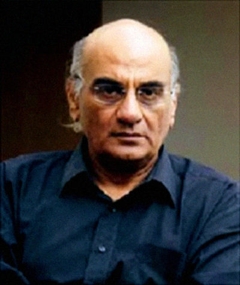
Mani Kaul & Cinema


“Cinema is a means of entertainment”. Correct, but not entirely. Its function, both as an entity of consumption and as a medium of expression is not limited to just ‘entertainment’. Dig a bit deeper, look beyond and you will realise that more than just being entertainment, it is an art form. In fact Italian film theoretician Ricciotto Canudo has even called cinema the ‘seventh art’, the other six being:  Music, Painting, Sculpting, Architecture, Poetry and Dance. 

This was the first art form (TV, mobile, internet etc came in later) that brought together all the other art forms under one umbrella and used them in varying degrees and forms to give cinema its own, very distinct identity. However, most filmmakers follow the time-tested, well established rules to churn out ‘regular cinema’, which is fine, and probably necessary to satisfy the masses and the pockets.

But there are a few practitioners of the medium who treat it as a tool through which visuals and sounds can be juxtaposed literally and laterally against time and space to communicate an idea in a different way altogether. They tend to find out newer possibilities and explore varied ways in which they can relate their vision and sensibilities with the medium and achieve their objective with relevance!

Rabindranath (Mani) Kaul was born in Jodhpur, Rajasthan in the year 1942. One of his uncles, Mahesh Kaul also happened to be a film director and actor. Later, he joined the Film and Television Institute, Pune as an acting student, but later on moved to the direction course. At the institute he had the privilege to study under the master filmmaker Ritwik Ghatak, who helped the young Mani refine his understanding of both the technical and creative aspects of the medium. He graduated in the year 1966.  


Right from the beginning, with his very first feature film Uski Roti (1969), Mani Kaul made his intentions loud and clear. He felt a compelling need to treat film primarily as a medium to explore form – not purely in a visual sense but as a distinctive ‘language’. Clearly, he was on a different tangent and probably that explains his interest in directors like Bresson.


The iconic French filmmaker Robert Bresson, also referred to as the Patron Saint of cinema, was known for 'austerity' in his films. He never showed anything that was unnecessary, indeed he went further, and often left the viewer to infer what was happening outside the frame. Hence the shot of hands, feet, door handles and other parts of objects where any other filmmaker would have shown the whole. 


According to Sight and Sound, "A key ingredient of Bresson's methods is his view of actors, his "models". In his films, actors were chosen not for their ability but for their appearance. He trained them to remove all traces of theatricality and to speak with a fast monotonic delivery. All movements of actors were strictly controlled by the director, when they walk they have to take a precise number of steps, and eye movements become extremely important - the lowering of the eyes towards the ground is almost a Bresson trademark. The result of this approach is that the viewer becomes involved not with a character's appearance but almost with the core of his being, his soul."


Such ideas had a marked influence on Mani Kaul. His films bear a distinct look in terms of visuals, expressions, acting, sound, music and camera movements. They can very well be termed as the pall bearers of an idea, a theory that found few and infrequent resonances from the audiences but which at the same time were distinct and resolutely pure enough to be recognised and explored as works of art.


Uski Roti was one the pioneering films of its time that helped launch the New Wave of Indian cinema. The audiences were caught unawares as they didn’t know how to react to this new kind of cinema which was so different from what they had been subject to till then. Undeterred by the reactions, both negative and positive, Mani Kaul carried on with his ‘brand’ of cinema with films like: Asad ka ek din (1971), Duvidha (1974), Ghasiram Kotwal (1976), Dhrupad (1982), Mati Manas (1984), Siddheshwari (1989), Nazar (1989), Idiot (1991) and Naukar ki Kameez (1997). In his body of work, be it feature films, documentaries or TV series, the standard definitions of fiction and non-fiction used to overlap and interplay. The fine line didn’t have sharp edges.


Through his films he adapted the works of writers like Mohan Rakesh, Vijay Tendulkar, the great Dostoevsky, musical genres like Dhrupad (of which he was singer as well) and cultural aspects especially in Mati Manas where he has explored the evolution of pottery in the sub-continent.


According to his long time friend, Dilip Padgaonkar, “If the stories that Mani told did not follow in a strict chronological order, if his characters did not act, if his stunning visuals left even the sentiment of awe suspended in mid-air, it was because he wanted his spectators to think of the medium differently. He wanted them to rise above the tiresome debate over form and content to discover that form in itself was a narrative experience – and not only in a plastic sense. The exploration of form, he cautioned time and again, should not be construed in terms of style – another bogey that, in his eyes, had stunted the evolution of film.”


Any person, who is honest in life, true to his purpose and creative in pursuit, has a bit of a teacher in him. And similar, I believe was the case with Mani Kaul. HE taught music in The Netherlands, mentored students at his alma-mater FTII. Later he joined as the creative director at the Film House of Osian's Connoisseurs of Art.

He tried, created and practiced his own language in the realm of cinema, with his sensibilities and understanding of the medium and the world. This, to my mind, is a single enough reason to explore his works as they open a new window to a different take on creation and recreation.